California Climate Solutions achieving environmental goals + creating business opportunities

Driving Demand

Solutions to Increase the Market for Heavy-Duty Zero-Emission Vehicles

Medium- and heavy-duty trucks are major contributors to greenhouse gas emissions and air pollution. Yet California’s policies to phase out fossil fuel-powered trucks in favor of zero-emission models have been undermined by recent federal actions, including a congressional vote to terminate California’s mandate on truck makers to produce zero-emission models and a rollback of many federal tax incentives for these vehicles. Furthermore, in January 2025 the state withdrew from U.S. EPA consideration its proposed mandate for major fleets to purchase zero-emission trucks.

To identify new state policies to increase demand for zero-emission trucks, UC Berkeley Law’s Center for Law, Energy and the Environment (CLEE) and the UCLA Law Emmett Institute on Climate Change and the Environment are releasing the new report Driving Demand: Solutions To Increase The Market for Heavy-Duty Zero-Emission Vehicles. Based on a convening of a select group of stakeholders and experts, the report offers recommendations for state and federal policy makers, as well as industry leaders.
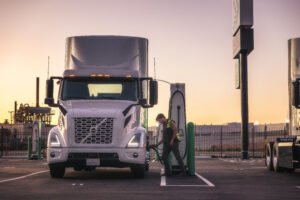
Medium- and heavy-duty trucks are major contributors to greenhouse gas emissions and air pollution. Their pollution disproportionately impacts low-income communities near shipping centers and highways. The state needs to reduce these vehicle emissions significantly to meet its air quality and climate goals. To pursue these targets, the state has developed numerous regulatory and incentive programs to help deploy more heavy-duty zero-emission vehicles—which have been undermined by recent federal actions.

Zero-emission trucks in some market segments already rival fossil-fueled alternatives on total cost of ownership. But in the near term they are still often more expensive for many use cases. While truck makers are producing more heavy-duty zero-emission models with improved range and charging times, demand is not yet sufficient to match the pace of the needed transition.

More federal and state policy support is needed to hasten zero-emission vehicle deployment. Alignment among the state’s elected and agency officials, advocates, and industry leaders will be critical to developing the state-based policies necessary to address policy-based, economic, and infrastructure barriers to deployment.

Policy Needs

Policy Solutions

Lack of policy support to drive demand

Create mandates and incentives that drive demand

The California Legislature

Direct the Public Utilities Commission and/or Air Resources Board to create a “Clean Miles Standard” for freight

The California Legislature could direct the Public Utilities Commission or Air Resources Board to create a Clean Miles Standard for freight, which would require shippers to meet a certain percentage of the miles their goods travel via clean technologies, like heavy-duty zero-emission vehicles.

The California Air Resources Board

Create a statewide Indirect Source
Rule under the Clean Air Act

The California Air Resources Board could create a statewide Indirect Source Rule under the Clean Air Act, which would regulate facilities like ports and warehouses that generate pollution indirectly by attracting mobile sources of emissions like trucks, requiring emission reductions from that vehicle traffic.

The California Air Resources Board

Initiate new regulations under the Clean Air Act to drive zero-emission truck adoption

The California Air Resources Board could initiate new regulations under the Clean Air Act to drive zero-emission truck adoption by setting emission standards for heavy-duty vehicles that help transition the trucking industry to zero-emissions over time.

The California Governor’s Office and Department of General Services

Create government procurement regulations

The California Governor’s Office and Department of General Services could create government procurement regulations requiring purchase or lease of zero-emission trucks and direct the Department of General Services to implement and oversee them, which would increase demand for zero-emission heavy-duty vehicles overall.

The Governor’s Office of Business and Economic Development

Help facilitate aggregation of shipper demand

The Governor’s Office of Business and Economic Development could help facilitate aggregation of shipper demand by coordinating various efforts and groups to enhance collective truck purchasing power and aggregating shipper demand for zero-emission freight initiatives to reduce supply chain and vehicle costs.

The Governor’s Office and state agencies

Support large-scale infrastructure deployment along priority corridors by identifying new “ZEV Ready Zones”

The Governor’s Office and state agencies could support large-scale infrastructure deployment by identifying priority corridors to direct zero-emission vehicle infrastructure and related deployment, expanding the existing “ZEV Ready Zones” that are equipped with the necessary infrastructure, policies, and planning to facilitate the transition.

High total cost of ownership

Develop incentives and policy solutions that reduce or offset vehicle purchasing costs and operational costs, including fueling

The California Legislature

Create long-term, consistent, flexible, and stackable incentives for truck purchases

The California Legislature could create long-term, consistent, flexible, and stackable incentives for zero-emission truck purchases to reduce investment risk and uncertainty about incentives.

The Governor’s Office of Business and Economic Development

Facilitate coordination of incentives

The Governor’s Office of Business and Economic Development could facilitate coordination of incentives by periodically convening administering entities such as ports, utilities, and agencies, or organizing in-depth sessions aimed at streamlining, restructuring, and coordinating across the various entities and incentives.

The California Legislature

Create revenue neutral, self-funding incentives programs for heavy-duty zero-emission vehicles

The California Legislature could create revenue neutral, self-funding incentive programs for heavy-duty zero-emission vehicles, in which fees on non-zero-emission vehicles fund rebates for zero-emission vehicles.

The California Legislature

Create tax credits for heavy-duty zero-emission vehicles

The California Legislature could create tax credits for heavy-duty zero-emission vehicles to help offset the purchasing cost of a new zero-emission heavy-duty vehicle.

The California Legislature

Exempt heavy-duty zero-emission vehicles
from the state sales tax or ensure they are taxed no more than their diesel
counterparts

The California Legislature could exempt heavy-duty zero-emission vehicles from the state sales tax or ensure they are taxed no more than their diesel counterparts to bolster the early adoption of heavy-duty zero-emission vehicles and enhance market competitiveness.

The California Legislature and Department of Motor Vehicles

Equalize registration fees

The California Legislature and Department of Motor Vehicles could equalize registration fees to ensure that zero-emission trucks do not pay more for registration than diesel trucks, based on their purchase price and vehicle weight, among other factors.

Federal leaders

Exempt medium- and heavy-duty zero-emission vehicles
from the federal excise tax and reinstate tax credits

Federal leaders could exempt medium- and heavy-duty zero-emission vehicles from the federal excise tax and reinstate tax credits to reduce costs, such as by maintaining and re-authorizing sections 45X (the Advanced Manufacturing Production Credit) and 45W (the Clean Commercial Vehicle Credit) in the federal tax code.

Ports

Create incentive programs for zero-emission heavy-duty vehicles

Ports could create incentive programs for zero-emission heavy-duty vehicles, such as by providing green lanes, preferential reservation, or reduced fees for zero-emission vehicles.

The California Public Utilities Commission

Could continue to help improve energization timelines

The California Public Utilities Commission could continue to help improve energization timelines for charging infrastructure and address fueling constraints to help lower total cost of ownership for fleets.

The California Legislature and Air Resources Board

Modify the Low Carbon Fuel Standard in future years to increase support for zero-emission heavy-duty vehicles

The California Legislature and Air Resources Board could modify the Low Carbon Fuel Standard in future years to increase support for zero-emission heavy-duty vehicles by shifting a greater share of credit value under the program from biofuels towards electrification, including vehicle charging infrastructure.

The California Public Utilities Commission and Energy Commission

Continue integrated planning and policy initiatives that support proactive grid planning

The California Public Utilities Commission and Energy Commission could continue integrated planning and policy initiatives that support and enable proactive grid planning, particularly in anticipation of load growth amid accelerated electrification.

The California Legislature and Transportation Commission

Adapt the Trade Corridor Enhancement Program to better align with the needs of charging infrastructure projects

The California Legislature and Transportation Commission could adapt the existing Trade Corridor Enhancement Program to better align with the needs of zero-emission vehicle infrastructure development projects, including charging stations.

The California Legislature and Public Utilities Commission

Speed up deployment of distributed energy resources to enhance charging infrastructure through streamlined permitting and regulatory clarity

The California Legislature and Public Utilities Commission could speed deployment of distributed energy resources that enhance charging infrastructure by streamlining permitting and increasing regulatory clarity.

California municipal utility leaders

Adopt Rule 29 procedures to support EV charging infrastructure deployment

California municipal utility leaders could adopt Rule 29 procedures to support electric vehicle charging infrastructure deployment, which could accelerate needed deployment in the service territories of utilities like the Los Angeles Department of Water and Power.

The California Legislature, Public Utilities Commission, and electric utilities

Extend demand-charge “holidays” and create a customer rate class for heavy-duty customers

The California Legislature, Public Utilities Commission, and electric utilities could extend demand-charge “holidays” or offer other mitigation options and create a customer rate class for heavy-duty customers, waiving or reducing demand charges for charging stations and giving fleets and heavy-duty charging depot operators the opportunity to deploy zero-emission trucks and experiment with charging strategies to reduce risks.

The California Legislature

Take specific programs and costs out of electricity rates to lower them

The California Legislature could take specific programs and costs out of electricity rates to lower them—i.e., by excluding wildfire costs—and make heavy-duty zero-emission vehicle charging much more affordable to achieve cost parity quicker.

The California Legislature

Create electricity tax breaks for medium- and heavy-duty meters

The California Legislature could create electricity tax breaks for medium- and heavy-duty charging station meters to further reduce fueling costs.

Congress

Extend the Alternative Fuel Vehicle Refueling Property Credit

Congress could extend the Alternative Fuel Vehicle Refueling Property Credit (section 30C of the tax code), which provides incentives for installing qualified alternative fuel vehicle refueling infrastructure, including electricity or hydrogen charging ports.

Negative perceptions of heavy-duty zero-emission vehicles

Address politization and mis- and dis-information

Industry leaders and advocates

Address mis- and disinformation through trusted messengers

Industry leaders and advocates could address mis- and disinformation through trusted messengers who share success stories with fleets, shippers, and policymakers.

Industry leaders and advocates

Address the politicization of zero-emission trucks by focusing on the co-benefits of deployment

Industry leaders and advocates could address the politicization of zero-emission trucks by focusing on the co-benefits of deployment, including improved global competitiveness, supply chain resilience through diversity of options for product shipping, more sustainable economic growth, and increased consumer choice and personal freedom.

The Governor’s Office of Business and Economic Development, the California Air Resources Board, and industry leaders

Enable peer-to-peer learning

The Governor’s Office of Business and Economic Development, the California Air Resources Board, and industry leaders (particularly fleet owners) could enable peer-to-peer learning by convening industry representatives and emphasizing opportunities for improved cost and increased demand, as well as highlighting specific use cases.

"California and jurisdictions around the world will need to transition to heavy-duty zero-emission vehicles, both to address air pollution,
particularly in marginalized communities, and to reduce greenhouse gas emissions."

Driving Demand, CLEE